AUGMENTED SYNERGY FOR ACCURATE & PARAMETRIC PROJECTS
CAD-BIM & AI CONVERGENCE: Reliability - Benefit - Innovation
By Markus Hormaza
CIVIL ENGINEERING
Through the HERCULEAN DESIGNS spin-off, structures and civil works are designed using parametric modeling, interference analysis, and coordination of connections with existing infrastructure. The BIM methodology enables the anticipation of construction conflicts and the coordination of disciplines in highly complex projects.
STRUCTURAL DESIGN IN BUILDINGS

| | Project: STRUCTURAL DESIGN IN BUILDINGS | | Date: 08/04/2022 | | Prepared by: Markus Hormaza, representative of ASAP PROJECTS © | | Objective: Proprietary work, basic structural design of a building | | Design Phase: Basic Engineering | | Project Scope: Development of the concrete structural design for a building, with emphasis on 3D modeling, standardized construction details, extraction of construction information, and generation of quantity takeoffs | | Standardization Codes and Standards: NSR-10 (Colombian Seismic-Resistant Code), AIA (American Institute of Architects), ASTM, ISO, ICONTEC (Colombian Construction Standards) | | Design Requirements: Reinforced concrete structure; 3D modeling and simulation through Building Information Modeling (BIM); quantity takeoffs and standard construction details; ensuring compliance with seismic-resistant standards and national and international construction codes | | Skills: CAD Management, Building Information Modeling (BIM), 3D Modeling, Project Information Management | | Technologies Used: CAD (Digital drafting and modeling); Building Information Modeling (BIM) | | LOD (Level of Development): LOD 300 | | Designed Components: Reinforced concrete structure; standardized construction methods for foundations, columns, beams, slabs, and other structural elements | | Generated Documentation: 3D models, structural drawings, construction details, material quantity takeoffs, construction method documentation | | Materials: Concrete with compressive strength f´c = 28 MPa; reinforcing steel ASTM A615 Grade 60 deformed bars with diameters ranging from 6 mm to 32 mm; Portland cement Type I and II ASTM C150 with 32.5 MPa strength; aggregates, admixtures, among others | | Software: AutoCAD, Autodesk Revit | | Considerations: This project focuses on the development of a structural design based on the use of CAD and BIM, ensuring efficient and detailed planning of a reinforced concrete building structure, in compliance with applicable Colombian seismic-resistant regulations and international standards | | Contact: Markus Hormaza, hormazamarkus@gmail.com | | Rights: ASAP PROJECTS ©. All rights reserved | |
CIVIL WORKS IN THE INDUSTRIAL SECTOR
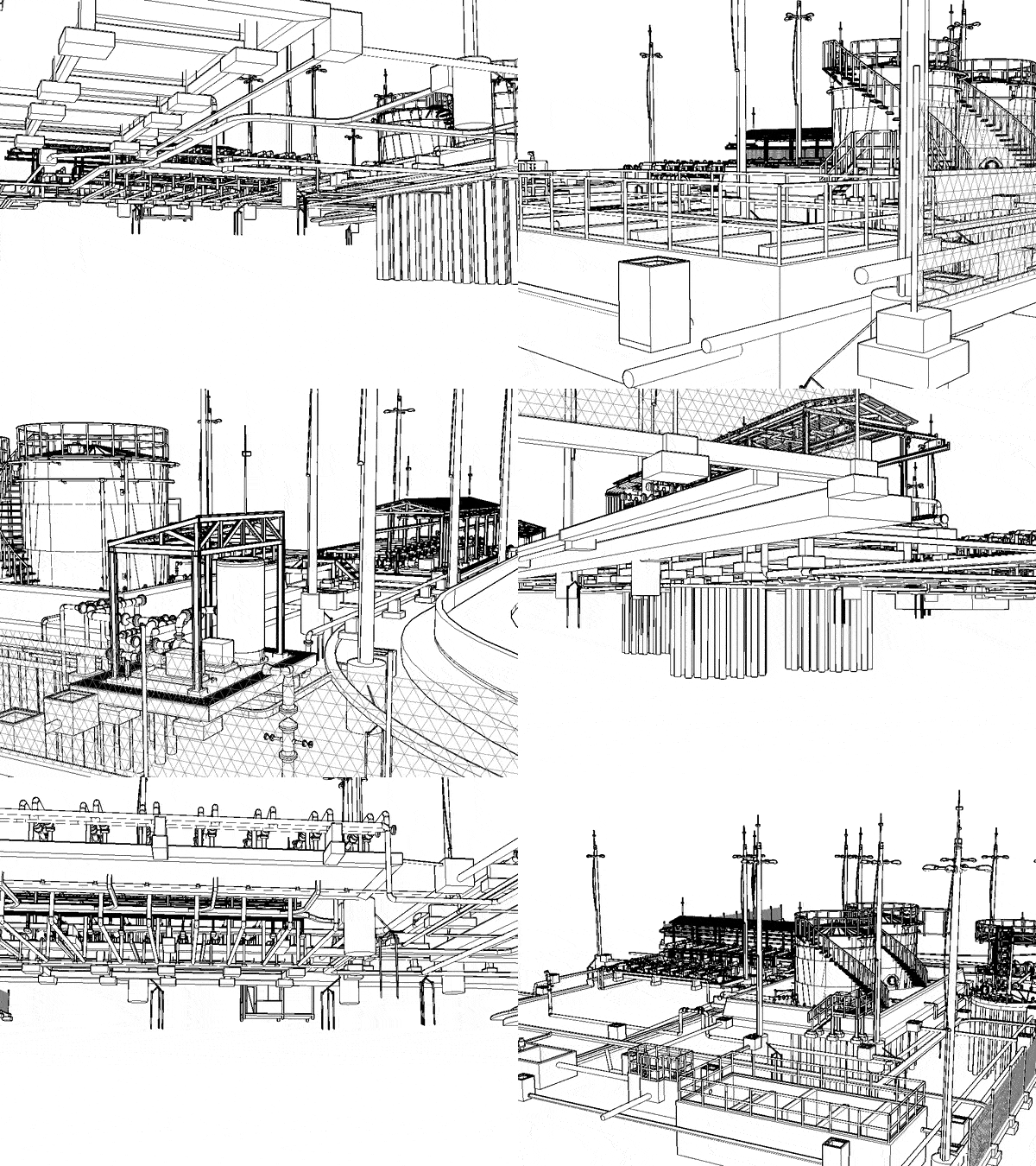
| | Project: CIVIL WORKS IN THE INDUSTRIAL SECTOR | | Date: 03/02/2020 | | Prepared by: Markus Hormaza, representative of ASAP PROJECTS © | | Objective: Proprietary work, basic civil works design for an AEC project with an Oil & Gas focus | | Design Phase: Basic Engineering | | Project Scope: Comprehensive development of civil and structural design for facilities in the Oil & Gas sector, including earthworks, stormwater and oily water management systems, containment dike design, deep and shallow foundations, as well as the integration of structural and non-structural elements | | Standardization Codes and Standards: NSR-10 (Colombian Seismic-Resistant Code), AISC (American Institute of Steel Construction), ACI (American Concrete Institute), ASCE (American Society of Civil Engineers), ASTM, ISO, ICONTEC (Colombian Construction Standards) | | Design Requirements: Reinforced concrete structures, 3D modeling and simulation using Building Information Modeling (BIM), quantity takeoffs and standard construction details, ensuring compliance with seismic-resistant standards and national and international construction codes | | Skills: CAD Management, Building Information Modeling (BIM), 3D Modeling, Project Information Management | | Technologies Used: CAD (Digital drafting and modeling); Building Information Modeling (BIM) | | LOD (Level of Development): LOD 300 | | Designed Components: Reinforced concrete structures, standardized construction methods for foundations, dikes, retaining walls, slabs, curbs, and other structural elements | | Documentation Produced: 3D models, structural drawings, construction details, material quantity takeoff lists, documentation for construction methods | | Materials: Geotextiles, concrete with compressive strength f’c = 28 MPa, reinforcing steel consisting of deformed bars ASTM A615 Grade 60 with diameters ranging from 6 mm to 32 mm, Portland cement Type I and II ASTM C150 with 32.5 MPa strength, aggregates, admixtures, among others | | Software: AutoCAD, Autodesk Revit | | Considerations: This project focuses on the development of a structural design within an AEC project, based on the use of CAD and BIM, ensuring efficient and detailed planning of a reinforced concrete structure, in compliance with applicable Colombian seismic-resistant regulations and international standards | | Contact: Markus Hormaza, hormazamarkus@gmail.com | | Rights: ASAP PROJECTS ©. All rights reserved | |
CIVIL WORKS IN THE ARCHITECTURAL SECTOR
![Proyecto Levantamiento Infraestructura Industrial [GIF].gif](https://static.wixstatic.com/media/61b593_7626cf70aaea4b39b1f62a99576f5467~mv2.gif)
| | Project: CIVIL WORKS IN THE ARCHITECTURAL SECTOR | | Date: 10/02/2025 | | Prepared by: Markus Hormaza, representative of ASAP PROJECTS © | | Objective: Proprietary work focused on CAD-BIM design and management of exposed technical installations within minimalist architectural spaces. 3D modeling and clash detection are developed among wet riser systems with upright sprinklers, lighting layouts, HVAC, and fire detection systems and sensors at different elevations without a suspended ceiling | | Design Phase: Basic engineering and interdisciplinary coordination | | Project Scope: Development of comprehensive architectural and technical design focused on digital information management (BIM Management), interference management, and visual and structural organization of installations supported on floor slabs | | Codes and Standards: NSR-10, NFPA 13, ASHRAE, ISO, ICONTEC, AISC, ASCE | | Design Requirements: 3D modeling, multidisciplinary design, comprehensive clash review in the 3D model, immersion and simulation, BIM information management across disciplines, ensuring accessibility, maintainability, and an industrial aesthetic consistent with exposed architecture | | Skills: CAD-BIM Management, 3D Modeling, Clash Detection, Interdisciplinary Coordination, Digital Information Management | | Technologies Used: Autodesk, Inc. | | LOD (Level of Development): LOD 300 | | Designed Components: Wet riser systems with upright sprinklers, electrical conduits, HVAC ducts, fire detection sensors and devices, metal supports, and visible fastening elements | | Documentation Produced: Coordinated 3D models, installation drawings by discipline, component lists, construction details, piping isometric spools, and documentation for installation and maintenance | | Considerations: Professional proprietary project focused on the management, feasibility, standardization, and multidisciplinary development of installations in minimalist industrial architecture without suspended ceilings, under an approach of efficiency, visual order, and digital information management for construction | | Contact: Markus Hormaza, hormazamarkus@gmail.com | | Rights: ASAP PROJECTS © All rights reserved | |
RAINWATER AND DRAINAGE TREATMENT SYSTEM

| | Project: RAINWATER AND DRAINAGE TREATMENT SYSTEM | | Date: 12/01/2023 | | Prepared by: Markus Hormaza, representative of ASAP PROJECTS © | | Objective: Development of a detailed 3D model integrating stormwater and oily water collection, conveyance, and treatment systems, ensuring operational functionality and safety in classified areas, in compliance with applicable technical standards in the Oil & Gas industry | | Design Phase: System layout and 3D modeling of stormwater and oily water management systems. Includes: design of underground and aboveground collection and conveyance networks; pipe slope optimization to ensure efficient flow without residue accumulation; coordination with other structures and installations to avoid clashes and design conflicts; integration of hydrocarbon and contaminated water separation systems; three-dimensional representation of petrochemical installations, catch basins, inspection chambers, and treatment units | | Required Skills: 3D modeling using CAD software; knowledge of industrial hydraulic design, oily fluid separation, and management of classified areas; multidisciplinary coordination in industrial projects; application of regulations for hydraulic systems, classified areas, and environmental compliance | | Development Specifications: 3D model with LOD 300, integrating: underground piping networks with optimal slopes for continuous flow; design of inspection chambers, catch basins, and separation units with standardized distances in accordance with API 610 and ASME B31.3; minimum separation of 10 meters between critical components and classified areas per NFPA 497 (classification of potentially explosive atmospheres); standardized spacing between chambers and catch basins, hydraulic grade line optimization and slope control; monitoring systems including valves, level sensors, and automated pumps | | Codes and Standards: API 421: Design and operation of oil-water separation systems. ASME B31.3: Process piping for the safe transport of industrial fluids. API 610: Design and arrangement of pumps in industrial hydraulic systems. NFPA 30: Flammable and Combustible Liquids Code. NFPA 497: Classification of hazardous atmospheres for industrial facilities. ISO 14001: Environmental management for industrial projects. RETIE: Electrical Installations Technical Regulation (applicable to auxiliary electrical components) | | Project Scope: Development of a three-dimensional model. Design of hydraulic networks for stormwater and oily water with optimized slopes and distances. Coordination with other installations to avoid construction-stage interferences and clashes. Implementation of standards for the collection, transport, and treatment of industrial waters, considering safety in classified areas | | Tool Used: Autodesk, Inc. | | Notes: The project focuses on the integration of industrial hydraulic systems with a functional, safe, and sustainable design. Slopes and distances between components are optimized to maximize flow efficiency and maintenance access, avoiding conflicts with other systems and structures | | Contact: Markus Hormaza, Email: hormazamarkus@gmail.com | | Rights: ASAP PROJECTS ©. All rights reserved | |
TAGS
#AutodeskInc, #CAD, #BIM, #Civil, #CivilStructures, #Civilworks, #AIA, #AISC, #API, #ASCE, #NSR-10, #ASAPPROJECTS, #HERCULEANSCIVILDESIGNS, #MarkusHormaza, #AI