AUGMENTED SYNERGY FOR ACCURATE & PARAMETRIC PROJECTS
CAD-BIM & AI CONVERGENCE: Reliability - Benefit - Innovation
By Markus Hormaza
MECHANICAL ENGINEERING
Through the ASMECHANICAL spin-off, equipment, tanks, vessels, and mechanical systems are designed using parametric modeling, detailed part breakdowns, assemblies, and simulations. The scope includes reverse engineering and As-Built documentation for maintenance and fabrication purposes.
WELDED TANK OIL STORAGE

| | Project: WELDED TANK OIL STORAGE | | Date: 11/02/2020 | | Prepared by: Markus Hormaza, representative of ASAP PROJECTS © | | Objective: Independent work, design of a hydrocarbon storage tank | | Design Phase: Detailed Engineering | | Project Scope: Mechanical design of the hydrocarbon storage tank, development of components, bill of materials, fabrication details, technical data, internal support structure breakdown, and installation details | | Standardization Standards: ASME (American Society of Mechanical Engineers), API (American Petroleum Institute), ASTM (American Society for Testing and Materials), NACE (National Association of Corrosion Engineers), NFPA (National Fire Protection Association) | | Design Requirements: Design of an atmospheric tank for hydrocarbon storage at atmospheric pressure with a conical roof. Dimensions, connections, and materials in accordance with ASME and API standards. Internal structure designed to withstand static and dynamic loads. Steel plates and structural supports following ASTM criteria | | Skills: CAD management, technical drafting and 3D modeling, mechanical design | | Technologies Used: CAD (Digital drafting and modeling); CAE (Stress simulation and strength of materials analysis – finite element analysis); CAM (CNC code generation for machining of selected components) | | LOD (Level of Development): LOD 300 | | Designed Components: Internal support structure, shell made of welded carbon steel plates, conical roof, internal reinforcements, flanged connections, seals and gaskets, shell and roof manholes Ø20”, cleanout door, roof access with helical staircase, anchor brackets, and construction and installation details | | Generated Documentation: 2D technical drawings, 3D modeling and implementation of artificial intelligence technology for enhanced immersion and interaction, shop drawings, assembly details, data extraction, quantity take-offs, and technical specifications | | Materials: Structural steel piping and plates in accordance with ASTM A36, fittings per ASME B16.5 standard, anticorrosive coatings per NACE RP-0169, steel structure per ANSI 360-16, steel structure requirement SBC 301 | | Software: Autodesk Inventor, AutoCAD, CAE and CAM tools for CNC code generation | | Considerations: This technical datasheet emphasizes international standards compliance, the use of drafting, design, and simulation technologies, and the minimum key aspects required for the development of a standardized hydrocarbon storage tank | | Contact: Markus Hormaza, hormazamarkus@gmail.com | | Rights: ASAP PROJECTS ©. All rights reserved | |
ATMOSPHERIC DISTILLATION TOWER [DATASHEET]
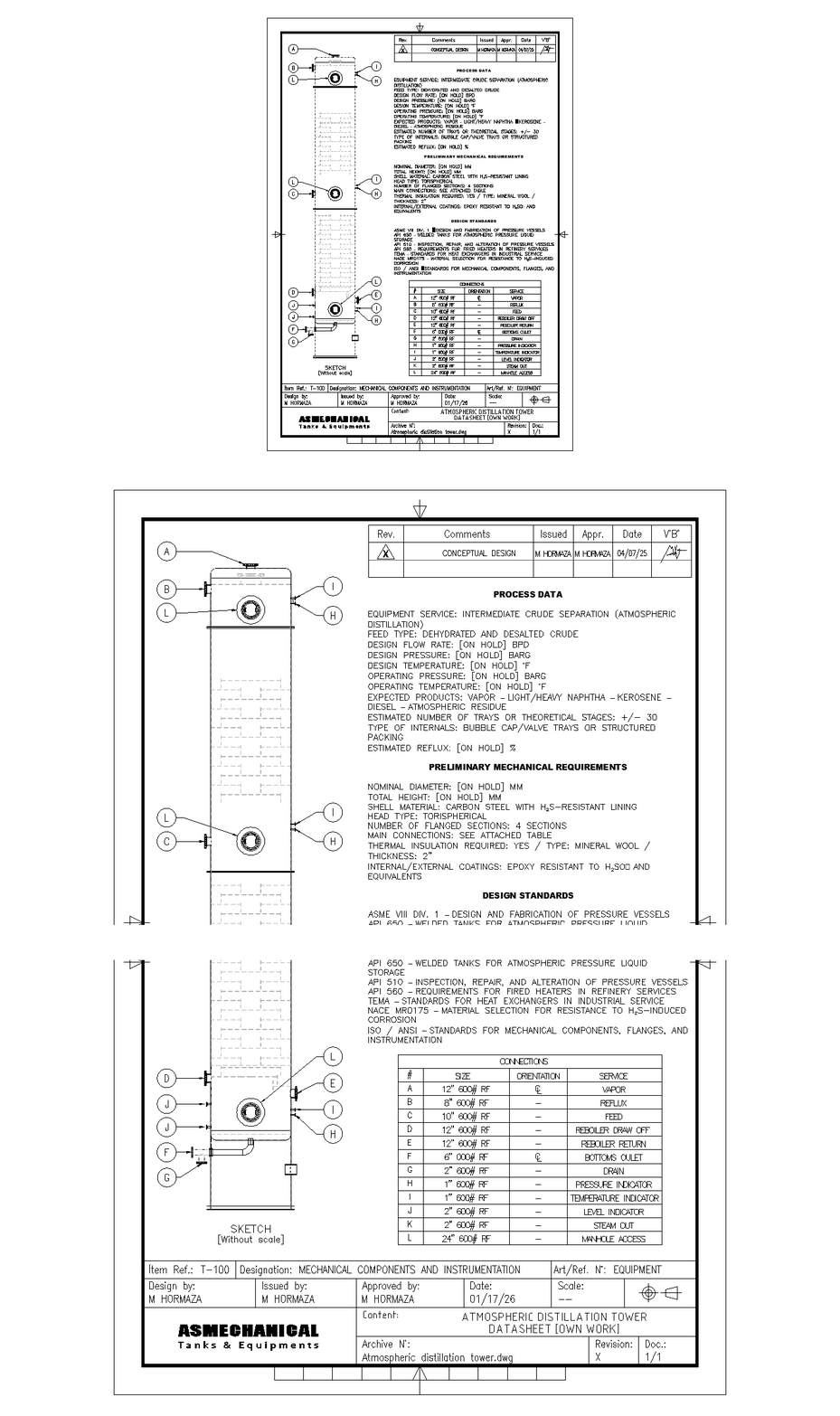
| | Project: ATMOSPHERIC DISTILLATION TOWER – DATASHEET | | Date: 02/24/2026 | | Prepared by: Markus Hormaza, representative of ASAP PROJECTS © | | Objective: As part of the mechanical engineering development component of the ASMECHANICAL, this technical datasheet is presented for the conceptual design of a Thermal Distillation Tower for hydrocarbon fraction separation. The design is developed under an advanced CAD-based parametrization approach, with direct linkage to interactive three-dimensional environments. The design follows mechanical logic routines aligned with ASME standards and ISA S5.1 symbology, ensuring technical consistency in manufacturing and assembly processes | | Design Phase: Conceptual Engineering – Mechanical Design of Process Equipment | | Project Scope: Development of the technical datasheet for an atmospheric crude oil distillation tower, as a core component of a thermal separation system. Includes: preliminary mechanical design, dimensional criteria, operating conditions, suggested materials, standardization for vendor selection, and integration of artificial intelligence for immersive visualization | | Reference Standards: ASME Section VIII Div. 1 (Pressure Vessel Design), API 650 (Storage Tanks), ISA S5.1 (Symbology), ASTM (Materials) | | Design Requirements: 2D conceptualization and development of a 3D mechanical model in AutoCAD and an interactive STL-based AI environment using Spline, Inc. Technical datasheet including key parameters: temperature, pressure, mass flow rate, tray type, and fabrication materials. Technical visualization in Spline for dynamic identification of critical zones and scaled 3D printing design. Integration of the datasheet with the 3D layout and associated piping system | | Applied Skills: Mechanical design of process equipment, standardization under international standards, parametric CAD modeling, and technical documentation for industrial component procurement and integration | | Technologies Used: Autodesk, Inc. and Spline, Inc.; artificial intelligence applied to parametric mechanical design | | LOD (Level of Development): LOD 200 – Schematic model with functional mechanical design attributes and primary dimensional relationships | | Designed Components: Parametric 3D model of the Thermal Distillation Tower – Technical datasheet with mechanical data – Integration with ISA S5.1 symbology – Associated piping layout in DWG environment and WebXR viewer | | Supplementary Reference: Oil Crude Atmospheric Distillation System [PFD] – Crude Distillation Tower – Datasheet | | Key System Components: Parametric mechanical CAD design compliant with ASME and ISA – Interactive STL representation of process equipment – Automation of symbology and operating conditions – Interoperable formats: DWG, STL, PDF, WebGL/WebXR – Structured technical data for equipment selection and procurement | | Consideration: ASMECHANICAL proposes a scalable methodology for conceptual mechanical design of process equipment, integrating standard CAD tools with advanced visualization and AI resources. This datasheet is information extracted from the referenced methodology and responds to technical criteria entered by configuration, directly corresponding to conceptual mechanical engineering phases for industrial projects | | Contact: Markus Hormaza, hormazamarkus@gmail.com | | Rights: ASAP PROJECTS ©. All rights reserved | |
ATMOSPHERIC DISTILLATION TOWER [MODEL]
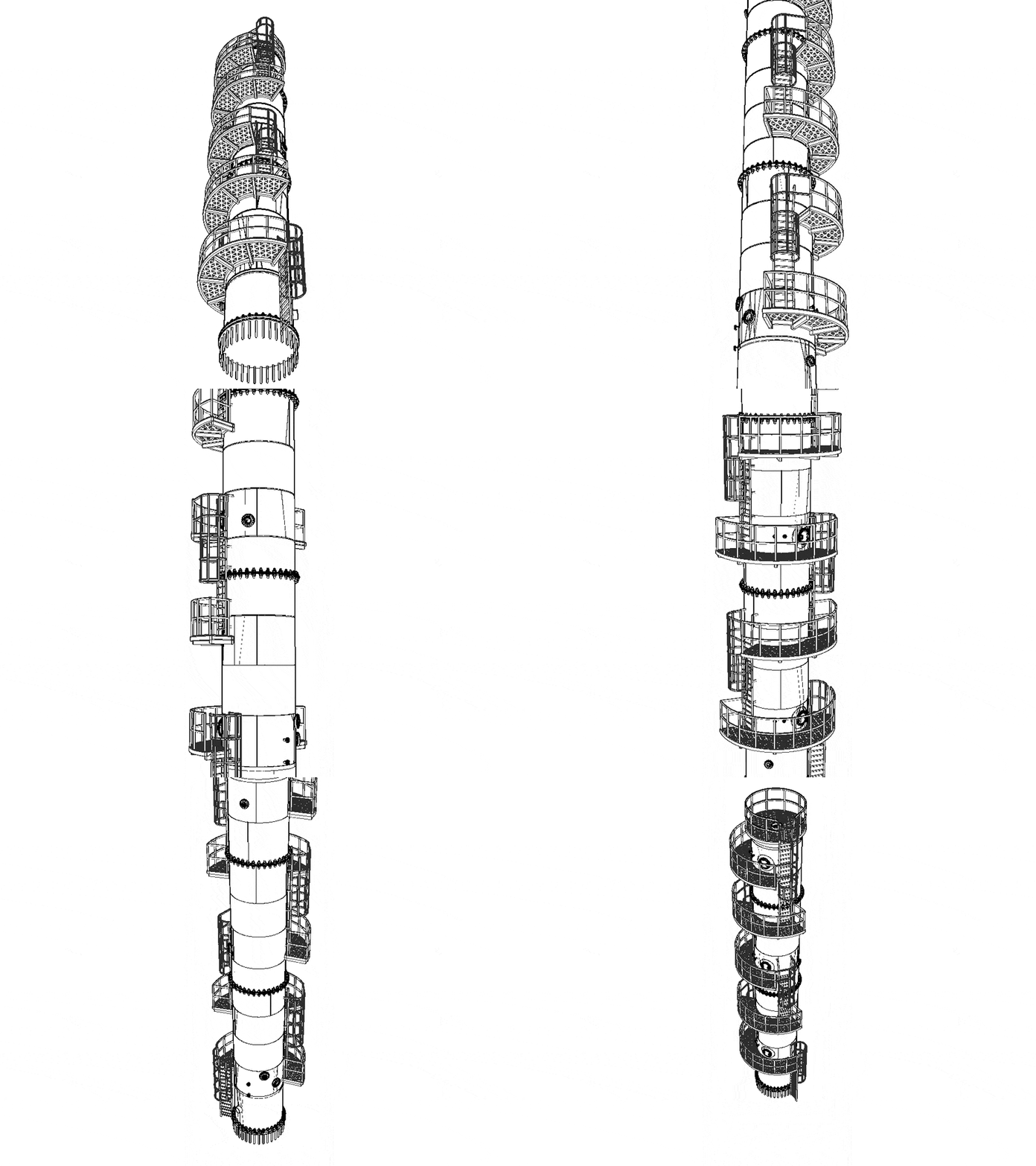
| | Project: ATMOSPHERIC DISTILLATION TOWER - MODEL | | Date: 04/12/2025 | | Prepared by: Markus Hormaza, representative of ASAP PROJECTS © | | Objective: Development and design of an atmospheric crude oil fractionation tower, aimed at the final separation of liquids after gas and coke pre-separation, within the Oil & Gas industry | | Design Phase: Conceptual Engineering | | Project Scope: Mechanical design of the atmospheric fractionation tower, development of main components, bill of materials, fabrication details, technical data, breakdown of the internal support structure, installation details, and integration with the piping system. A collaborative, multidisciplinary approach is incorporated under BIM methodology for design, fabrication, and commissioning | | Standardization Standards: ASME (American Society of Mechanical Engineers), API (American Petroleum Institute), ASTM (American Society for Testing and Materials), NACE (National Association of Corrosion Engineers), NFPA (National Fire Protection Association), ISO 9001 (Quality Management System) | | Design Requirements: Design of an atmospheric fractionation tower for the final separation of crude oil, operating at specific pressures and temperatures. The design considers thermal efficiency, structural strength, and alignment with ASME and API standards. The tower incorporates distillation trays, heat exchangers, and recirculation systems, constructed with materials resistant to high temperatures and corrosion. The internal structure is designed to withstand static and dynamic loads | | Skills: CAD management, technical drafting and 3D modeling, mechanical design, structural and thermal analysis, process simulation, and interdisciplinary coordination under BIM principles | | Technologies Used: CAD (Digital drafting and modeling); CAE (Stress simulation, thermal and structural analysis); CAM (Machining of critical components); application of BIM methodology for traceability and control of design, fabrication, installation, and commissioning | | LOD (Level of Development): LOD 300 | | Designed Components: Internal support structure, distillation trays, absorption columns, phase separators, flanged connections, seals and gaskets, temperature and pressure control systems, steam recirculation systems, access and maintenance platforms, ladder-type stairs, and construction and installation details. Includes physical and logical integration with the industrial piping network | | Generated Documentation: 2D technical drawings, 3D modeling, thermal and structural simulations, shop drawings, assembly details, quantity take-offs, technical specifications, and integrated document control under BIM methodology | | Materials: Steel and special alloys per ASTM A240; structural steel per ASTM A36; ASME B16.5 fittings; anticorrosive coatings per NACE RP-0169; steel structure per ANSI 360-16; seals and gaskets suitable for demanding thermal operating conditions | | Software: Autodesk Inventor, AutoCAD, Autodesk Fusion 360 | | Considerations: Although no dedicated BIM software is used, the project fully adopts BIM methodology: multidisciplinary coordination, element traceability, consistency across phases, and lifecycle control of the design from conceptual engineering through commissioning. This approach enabled synchronization of designers, manufacturers, and constructors, minimizing clashes, ensuring assembly quality, and guaranteeing system efficiency within its operational environment | | Contact: Markus Hormaza, hormazamarkus@gmail.com | | Rights: ASAP PROJECTS ©. All rights reserved | |
SCRUBBER
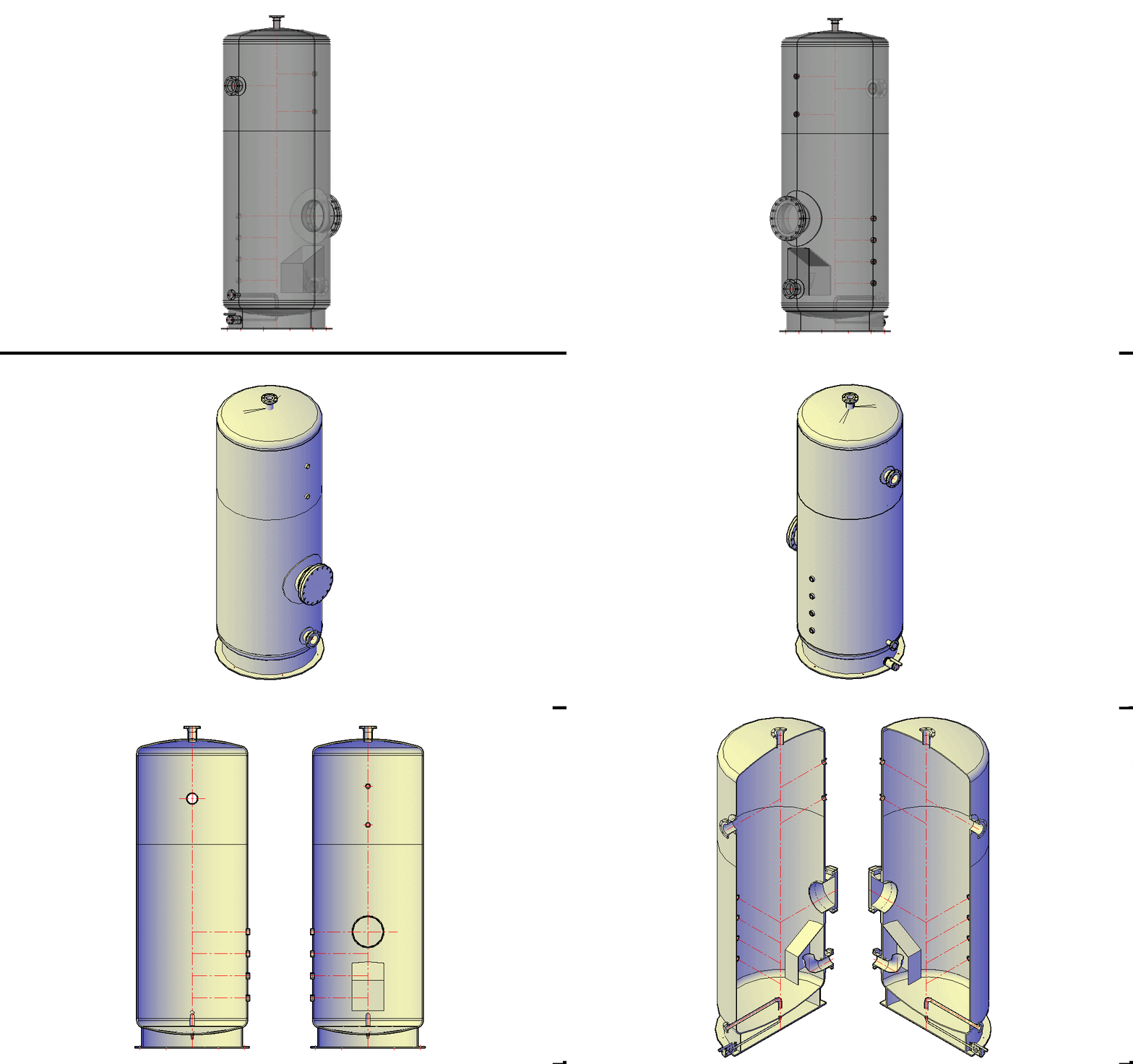
| | Project: SCRUBBER | | Date: 05/18/2023 | | Prepared by: Markus Hormaza, representative of ASAP PROJECTS © | | Objective: Independent work, detailed design of a scrubber (pressure vessel) | | Design Phase: Basic Engineering | | Project Scope: Technical development of a scrubber, including the design of its components, bill of materials, and fabrication details | | Standardization Standards: ASME (American Society of Mechanical Engineers), API (American Petroleum Institute), ASTM (American Society for Testing and Materials), NACE (National Association of Corrosion Engineers), NFPA (National Fire Protection Association) | | Design Requirements: The scrubber design complies with ASME standards for pressure vessels and API requirements for operation in industrial environments. Gas control and treatment through contaminant removal processes are considered, with material selection based on ASTM criteria and safety standards under NFPA and NACE for corrosion resistance | | Skills: CAD management, technical drafting and 3D modeling, mechanical design | | Technologies Used: CAD (Digital drafting and modeling); CAE (Pressure resistance simulations, internal flow and thermal analysis); CAM (CNC programming for component fabrication) | | LOD (Level of Development): LOD 300 | | Designed Components: Main scrubber body, connections, manhole, internal baffles, mist eliminators, structural support, and instrumentation connections | | Generated Documentation: 2D technical drawings, 3D modeling and implementation of artificial intelligence technology for enhanced immersion and interaction, shop drawings, assembly details, data extraction, quantity take-offs, and technical specifications | | Materials: Corrosion-resistant stainless steel (per ASTM standards), coatings and protections per NACE requirements for corrosive environments, and safety components compliant with NFPA | | Software: Autodesk Inventor, AutoCAD, CAE for internal pressure simulation, and CAM for fabrication | | Considerations: This technical datasheet details the design of a key piece of equipment for gas treatment in industrial processes, complying with stringent safety and corrosion resistance standards | | Contact: Markus Hormaza, hormazamarkus@gmail.com | | Rights: ASAP PROJECTS ©. All rights reserved | |
BIDIRECTIONAL PIGGING TRAP
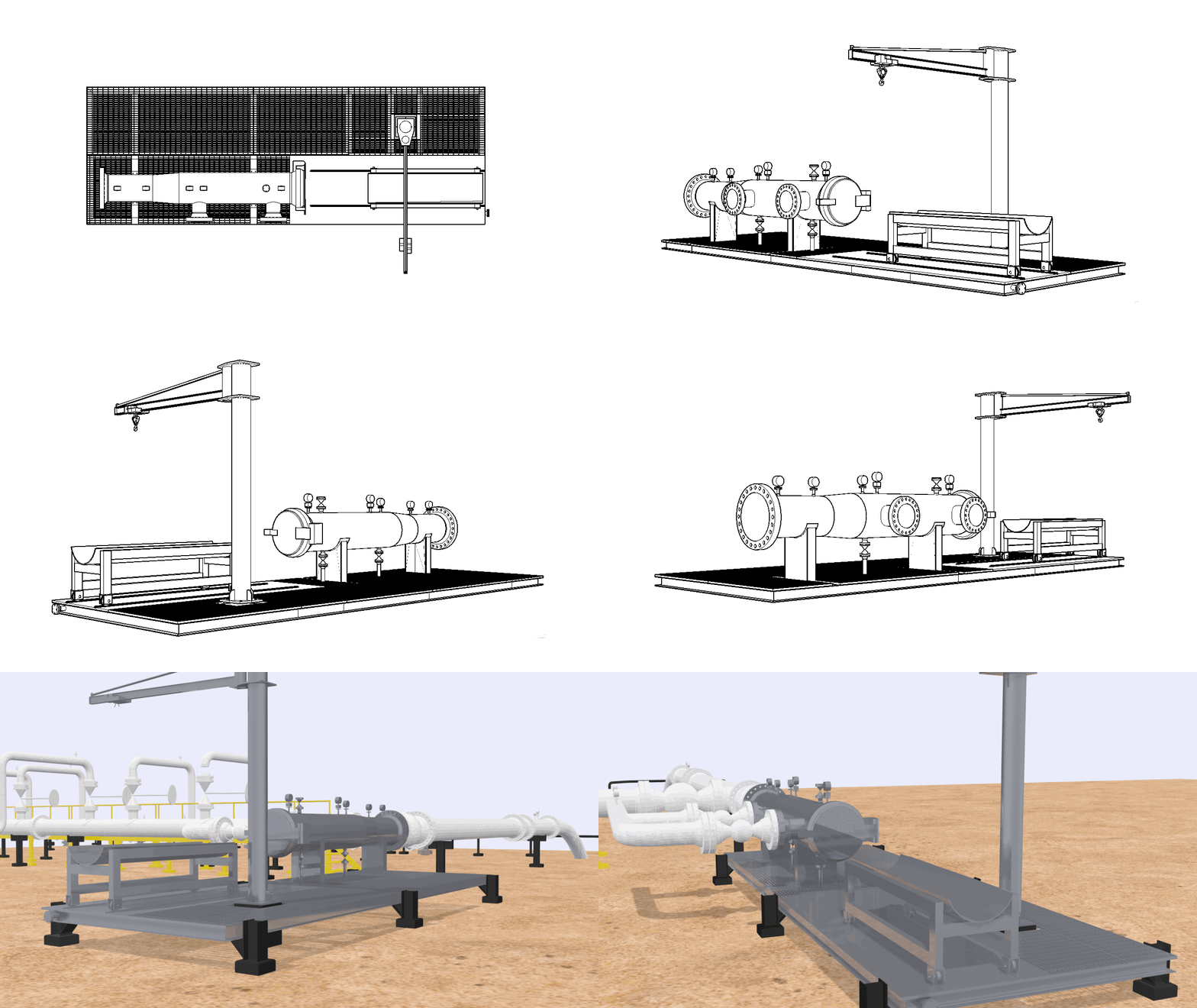
| | Project: BIDIRECCIONAL PIGGING TRAP | | Date: 04/21/2022 | | Prepared by: Markus Hormaza, representative of ASAP PROJECTS © | | Objective: Independent work, detailed design of a pig launcher trap for pig dispatch in pipeline maintenance operations | | Phase: Detailed Design | | Project Scope: Technical development of a pig launcher trap used in pipeline maintenance. Includes connection orientation, material and component selection, bill of materials, fabrication details, technical data, construction details, and assembly | | Standardization Standards: SAES (Saudi Aramco Engineering Standards), SBC (Saudi Building Code), ASME (American Society of Mechanical Engineers), API (American Petroleum Institute), ASTM (American Society for Testing and Materials), NACE (National Association of Corrosion Engineers), NFPA (National Fire Protection Association) | | Design Requirements: Pig launcher trap designed to ensure efficient and safe pipeline maintenance, in accordance with ASME standards for structural integrity and API requirements for pipeline system design. Material selection complies with ASTM specifications, ensuring durability under severe industrial conditions, as well as Saudi Arabian standards and their specific operating requirements | | Skills: CAD management, technical drafting and 3D modeling, mechanical design | | Technologies Used: CAD (Digital drafting and modeling); CAE (Load simulations and stress analysis to validate structural integrity); CAM (CNC code generation for machining selected components) | | LOD (Level of Development): LOD 350 | | Designed Components: Barrel, clamp-on type opening closure, flanged connections, supports and mounting accessories, lifting davit, movable tray, structural skid | | Generated Documentation: 2D technical drawings, 3D modeling and implementation of artificial intelligence technology for enhanced immersion and interaction, shop drawings, assembly details, data extraction, quantity take-offs, and technical specifications | | Materials: Carbon steel or stainless steel in accordance with ASTM standards, with anticorrosive coatings specified by NACE for corrosive working environments | | Software: Autodesk Inventor, AutoCAD, CAE for structural simulations, CAM for component fabrication | | Considerations: This technical datasheet strictly follows the referenced standards to ensure structural integrity and safe operation in pipeline maintenance, meeting durability and operational efficiency requirements | | Contact: Markus Hormaza, hormazamarkus@gmail.com | | Rights: ASAP PROJECTS ©. All rights reserved | |
SHELL-AND-TUBE HEAT EXCHANGER (AES TYPE)

| | Project: SHELL-AND-TUBE HEAT EXCHANGERS (AES Type) | | Date: 02/11/2020 | | Prepared by: Markus Hormaza, representative of ASAP PROJECTS © | | Objective: Independent work, detailed design of an AES-type heat exchanger | | Design Phase: Basic Engineering | | Project Scope: Technical development of an AES-type (shell-and-tube) heat exchanger. Includes material selection, quantities, fabrication details, technical datasheet, development of steel plates, internal support structure, and assembly scheme | | Standardization Standards: ASME (American Society of Mechanical Engineers), API (American Petroleum Institute), ASTM (American Society for Testing and Materials), NACE (National Association of Corrosion Engineers), NFPA (National Fire Protection Association) | | Design Requirements: AES-type shell-and-tube heat exchanger designed in accordance with ASME standards for structural integrity and API requirements for use in process industries. Material and component selection complies with ASTM standards for thermal resistance and NACE standards for corrosion protection in industrial environments | | Skills: CAD management, technical drafting and 3D modeling, mechanical design | | Technologies Used: CAD (Digital drafting and modeling); CAE (Heat transfer analysis and flow simulations); CAM (Computer-aided manufacturing for production of structural components) | | LOD (Level of Development): LOD 300 | | Designed Components: Shell, internal tubes, tube sheets, channel heads, end closures, supports, and connections | | Generated Documentation: 2D technical drawings, 3D modeling and implementation of artificial intelligence technology for enhanced immersion and interaction, bill of materials, assembly details, and technical datasheet | | Materials: Carbon steel or stainless steel per ASTM standards, with anticorrosive coatings specified by NACE for severe industrial operating conditions | | Software: Autodesk Inventor, AutoCAD, CAE for thermal simulations, and CAM for fabrication | | Considerations: This AES-type heat exchanger design strictly follows ASME and API standards to ensure thermal efficiency and operational safety in industrial environments | | Contact: Markus Hormaza, hormazamarkus@gmail.com | | Rights: ASAP PROJECTS ©. All rights reserved | |
**UNDER CONSTRUCTION**
MOBILE OFFSHORE DRILLING UNIT - JB117 - JACK UP BARGE
**LICENSED BY JACK-UP BARGE**
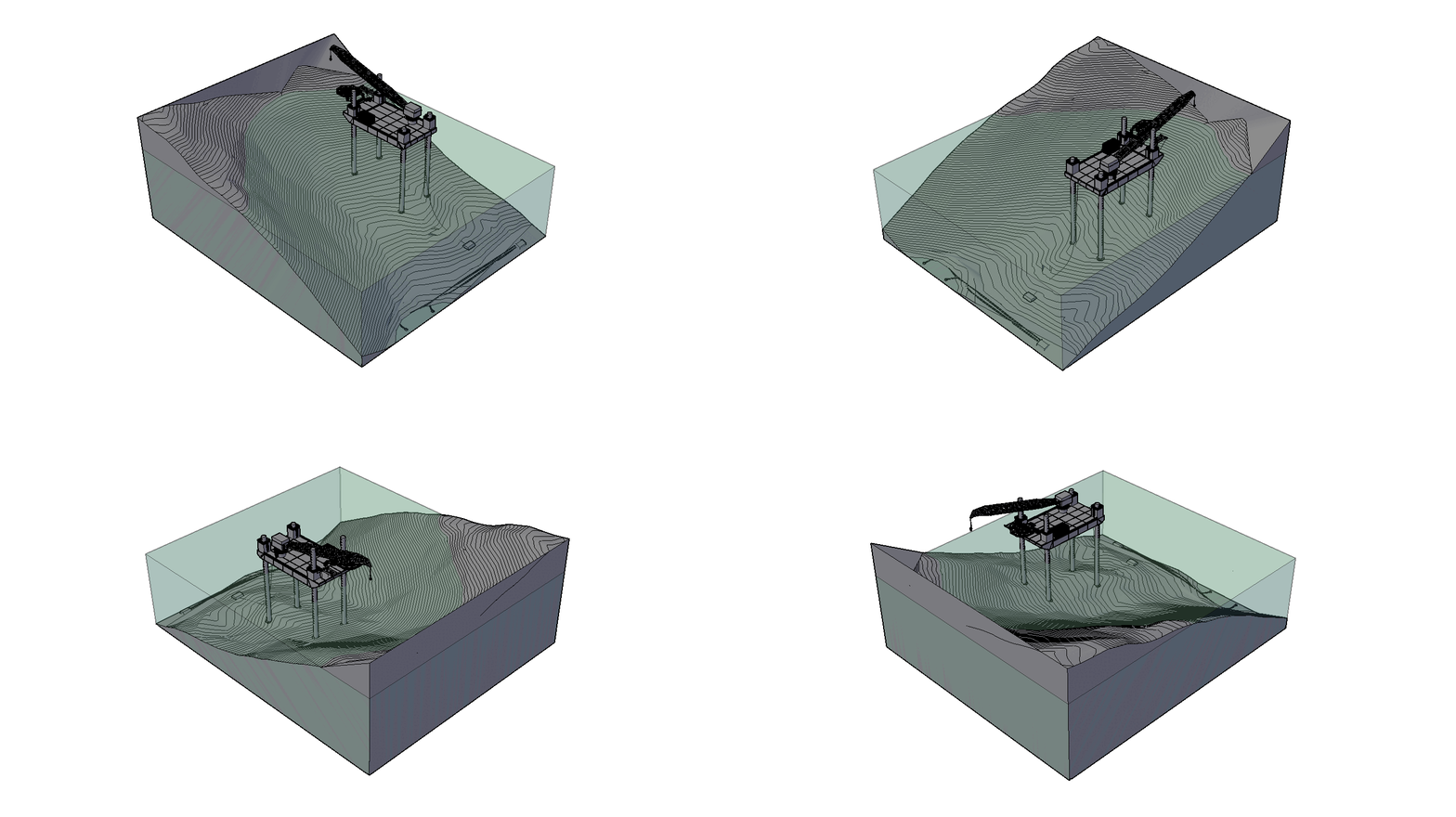
| | Project: MOBILE OFFSHORE DRILLING UNIT [Self-Elevating Platform] (JB-117) | | Date: 04/06/2021 | | Prepared by: Markus Hormaza, representative of ASAP PROJECTS © | | Objective: Independent work, basic design of a self-elevating platform for offshore operations | | Design Phase: Basic Engineering | | Project Scope: 3D modeling of the JB-117 self-elevating platform, design of support structures, steel plates, standardized construction details, detailed assembly, and bill of quantities. The design includes maritime safety aspects, fire protection systems, personnel transport loads, and safe handling of petrochemicals | | Standardization Standards: ASME (American Society of Mechanical Engineers), ASTM (American Society for Testing and Materials), NACE (National Association of Corrosion Engineers), NFPA (National Fire Protection Association), API Standards for Safe Offshore Operations | | Design Requirements: Design of a self-elevating structure for an offshore oil platform, with emphasis on stability under dynamic and static loads and compliance with maritime construction and safety standards. Design of structural components and safety systems for personnel transport and petrochemical load handling. Standardized scheme for the vertical drilling system | | Skills: Technical drafting, 3D modeling, CAD management, mechanical design | | Technologies Used: CAD (Digital drafting and modeling); CAE (Dynamic load and force analysis for offshore structures, finite element analysis); CAM (CNC programming for fabrication of structural components) | | LOD (Level of Development): LOD 300 | | Designed Components: Self-elevating platform structure using a hydraulic column system, fire protection and petrochemical safety systems, support structures for personnel transport and deck load handling. Plot plan for equipment and platform layout to support operation and maintenance | | Generated Documentation: 2D technical drawings, 3D modeling and implementation of artificial intelligence technology for enhanced immersion and interaction, shop drawings, data extraction, quantity take-offs, and technical specifications | | Materials: ASTM A36 structural steel, components with anticorrosive protection per NACE standards, equipment and safety systems in accordance with NFPA and API Offshore Standards | | Software: Autodesk Inventor, AutoCAD, CAE for stability analysis, and CAM for CNC fabrication | | Reference Resource: JB-117 Self-Elevating Platform from [www.jackupbarge.com], The Netherlands | | Publication License: RE: 06072021-TRANSMITTAL # 2021-ASPR-007-IMA-TRM-001 | | Considerations: This technical datasheet covers the key aspects of the offshore project, ensuring compliance with international maritime safety regulations and technical specifications for self-elevating platforms. The original design is courtesy of Jurgen de Prez, Commercial Representative of JACK-UP BARGE. Info: [www.jackupbarge.com], Krausstraat 14-16, 3364 AD Sliedrecht, The Netherlands | | Contact: Markus Hormaza, hormazamarkus@gmail.com | | Rights: ASAP PROJECTS ©. All rights reserved | |
TAGS
#AutodeskInc., #BIM, #CAD, #CAE, #CAM, #Mechanical, #ASME, #ASTM, #API, #NACE, #NFPA, #OffshoreStandards, #Oil&Gas, #Fittings, #Jack-UpBarge, #Ergil, #TexasFlange, #BonnetForge, #ASAPPROJECTS, #PETROCADDESIGNS, #MarkusHormaza, #AI