top of page
AUGMENTED SYNERGY FOR ACCURATE & PARAMETRIC PROJECTS
CAD-BIM & AI CONVERGENCE: Reliability - Benefit - Innovation
By Markus Hormaza
METALMECHANICAL MACHINING
Through the MECANIUSFORGE spin-off, parametric technical drafting and 3D modeling of metal-mechanical components are developed, including turned parts, milled parts, and assemblies. A digital twin is generated along with configuration for computer-aided manufacturing (CAM) processes and CNC setup for industrial machining operations.
METALMECHANICAL MACHINING, FORMING AND ASSEMBLY
MECANIZADO METALMECANICO
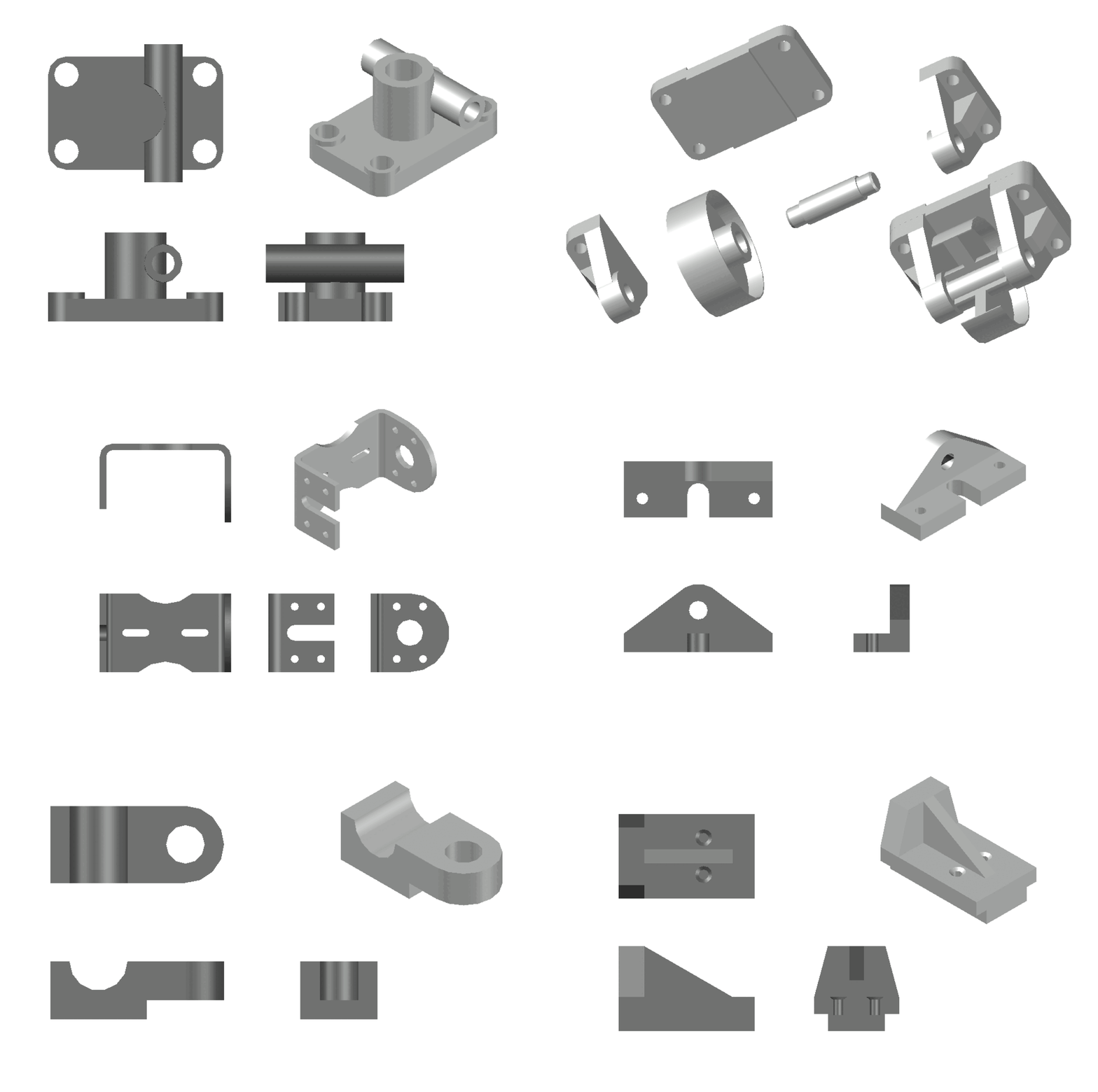

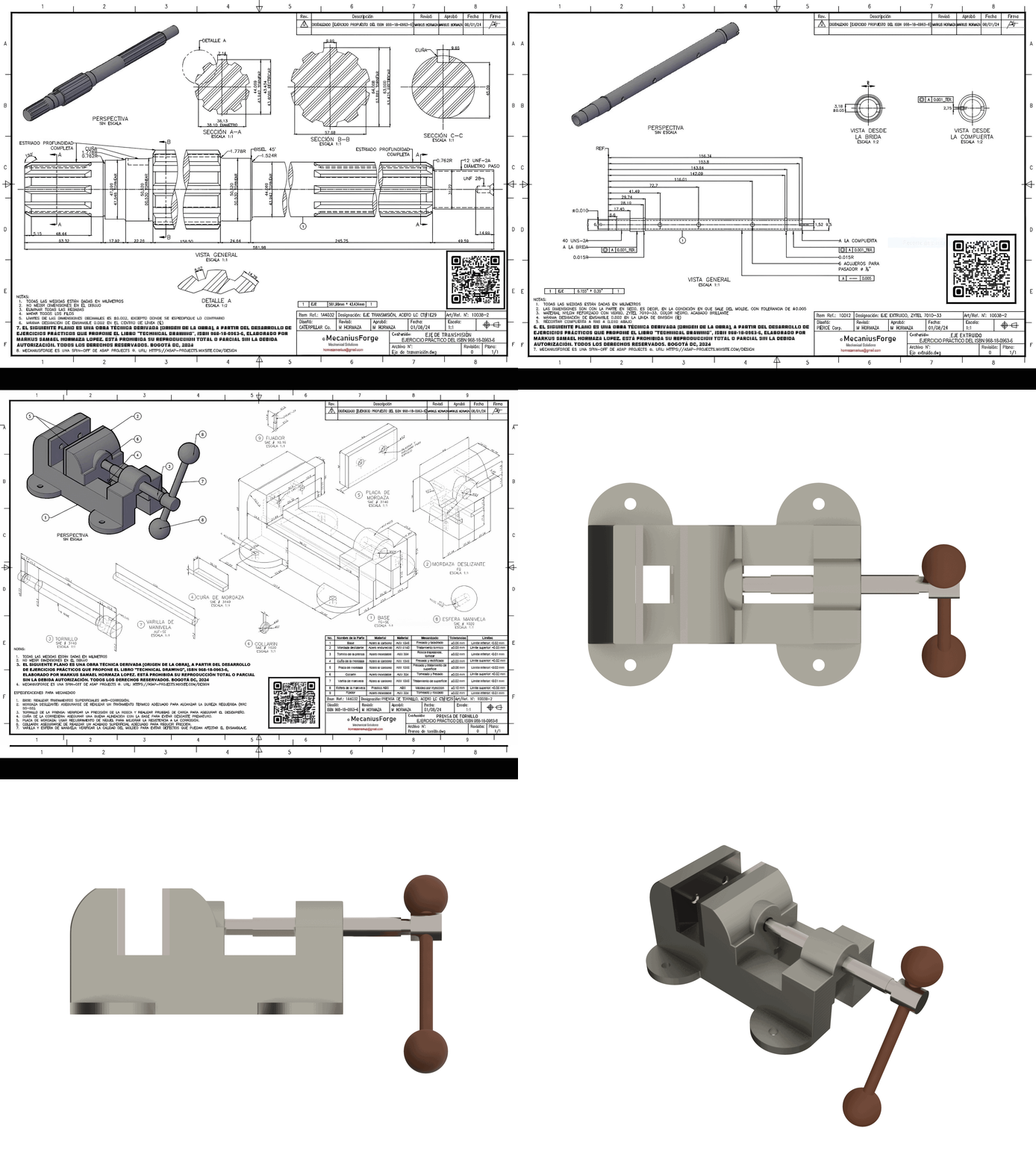
| | Project: METALMECHANICAL MACHINING, FORMING, AND ASSEMBLY | | Date: 01/06/2022 | | Prepared by: Markus Hormaza, representative of ASAP PROJECTS © | | Objective: Independent work, detailed design for industrial machining | | Design Phase: Detailed Engineering | | Project Scope: Sketching. Metrology and design. Sections. Materials. Surfaces. Tolerance values and manufacturing quality [ISO]. Simulation. Industrial machining. CNC (Computer Numerical Control). Manufacturing cycles. Assembly fitting. Drawing presentation and preparation | | Standardization Standards: ASME (American Society of Mechanical Engineers), ASTM (American Society for Testing and Materials), ISO (International Organization for Standardization), ANSI (American National Standards Institute) | | Design Requirements: 3D modeling and simulation using CAD/CAM software, optimization of CNC cutting and machining paths. Quantity take-offs, technical specifications, and precise fabrication details are extracted, ensuring compliance with international machining standards, geometric tolerances, and metalmechanical manufacturing quality standards | | Skills: Proficiency in CAD/CAM software, interpretation of technical drawings, knowledge of materials and manufacturing processes, precision and attention to detail, applied mathematics and geometry, basic CNC programming, and knowledge of standards and regulations | | Technologies Used: CAD (Computer-Aided Design), CAM (Computer-Aided Manufacturing), CAE (Computer-Aided Engineering) | | LOD (Level of Development): LOD 300 | | Machined Components: Precision components manufactured through computer numerical control (CNC), including shafts, housings, gears, and other metallic components. Standardized milling, turning, and drilling methods are applied to ensure tight tolerances and optimal surface finishes, in accordance with mechanical design requirements and international manufacturing standards | | Generated Documentation: 3D models, assembly drawings, bills of quantities, technical documentation, and CNC setup configurations | | Materials: Carbon steel and steel alloys in accordance with ASTM A36 and AISI 4140 standards, providing optimal mechanical strength for CNC machining. Metallic bars and plates in diameter and thickness ranges per design specifications, including materials such as aluminum 6061-T6, stainless steel types 304 and 316. Heat treatments, coatings, and surface finishes are applied as required, ensuring wear resistance and compliance with standardized dimensional tolerances | | Software: AutoCAD, Autodesk Inventor | | Resources: (1) Proposed exercises from the book Fundamentals of Engineering Graphics, ISBN 968-422-765-5. (2) Proposed exercises from the book Execution of Machining, Forming, and Assembly Processes, ISBN 84-9732-262-2 | | Considerations: This project is developed under a rigorous technical approach using CAD, CAE, and CAM, ensuring precision and efficiency in the production of metalmechanical components, from design through final assembly | | Contact: Markus Hormaza, hormazamarkus@gmail.com | | Rights: ASAP PROJECTS ©. All rights reserved | |
METALMECHANICAL MACHINING, FORMING AND ASSEMBLY
MECANIZADO METALMECANICO

| | Project: METALMECHANICAL MACHINING, FORMING, AND ASSEMBLY | | Date: 01/06/2022 | | Prepared by: Markus Hormaza, representative of ASAP PROJECTS © | | Objective: Independent work, detailed design for industrial machining | | Design Phase: Detailed Engineering | | Project Scope: Sketching. Metrology and design. Sections. Materials. Surfaces. Tolerance values and manufacturing quality [ISO]. Simulation. Industrial machining. CNC (Computer Numerical Control). Manufacturing cycles. Assembly fitting. Drawing presentation and preparation | | Standardization Standards: ASME (American Society of Mechanical Engineers), ASTM (American Society for Testing and Materials), ISO (International Organization for Standardization), ANSI (American National Standards Institute) | | Design Requirements: 3D modeling and simulation using CAD/CAM software, optimization of CNC cutting and machining paths. Quantity take-offs, technical specifications, and precise fabrication details are extracted, ensuring compliance with international machining standards, geometric tolerances, and metalmechanical manufacturing quality standards | | Skills: Proficiency in CAD/CAM software, interpretation of technical drawings, knowledge of materials and manufacturing processes, precision and attention to detail, applied mathematics and geometry, basic CNC programming, and knowledge of standards and regulations | | Technologies Used: CAD (Computer-Aided Design), CAM (Computer-Aided Manufacturing), CAE (Computer-Aided Engineering) | | LOD (Level of Development): LOD 300 | | Machined Components: Precision components manufactured through computer numerical control (CNC), including shafts, housings, gears, and other metallic components. Standardized milling, turning, and drilling methods are applied to ensure tight tolerances and optimal surface finishes, in accordance with mechanical design requirements and international manufacturing standards | | Generated Documentation: 3D models, assembly drawings, bills of quantities, technical documentation, and CNC setup configurations | | Materials: Carbon steel and steel alloys in accordance with ASTM A36 and AISI 4140 standards, providing optimal mechanical strength for CNC machining. Metallic bars and plates in diameter and thickness ranges per design specifications, including materials such as aluminum 6061-T6, stainless steel types 304 and 316. Heat treatments, coatings, and surface finishes are applied as required, ensuring wear resistance and compliance with standardized dimensional tolerances | | Software: AutoCAD, Autodesk Inventor | | Resources: (1) Proposed exercises from the book Fundamentals of Engineering Graphics, ISBN 968-422-765-5. (2) Proposed exercises from the book Execution of Machining, Forming, and Assembly Processes, ISBN 84-9732-262-2 | | Considerations: This project is developed under a rigorous technical approach using CAD, CAE, and CAM, ensuring precision and efficiency in the production of metalmechanical components, from design through final assembly | | Contact: Markus Hormaza, hormazamarkus@gmail.com | | Rights: ASAP PROJECTS ©. All rights reserved | |
TAGS
#AutodeskInc., #CAD, #CAE, #CAM, #Mechanical, #Manufacture, #ASME, #ASTM, #ANSI, #ASAPPROJECTS, #MECANIUSFORGE, #MarkusHormaza, #AI
bottom of page